HEALTHCARE RESEARCH AND PATIENT RESOURCE FOLDERBehavioral Health Patient Discharge Toolkit
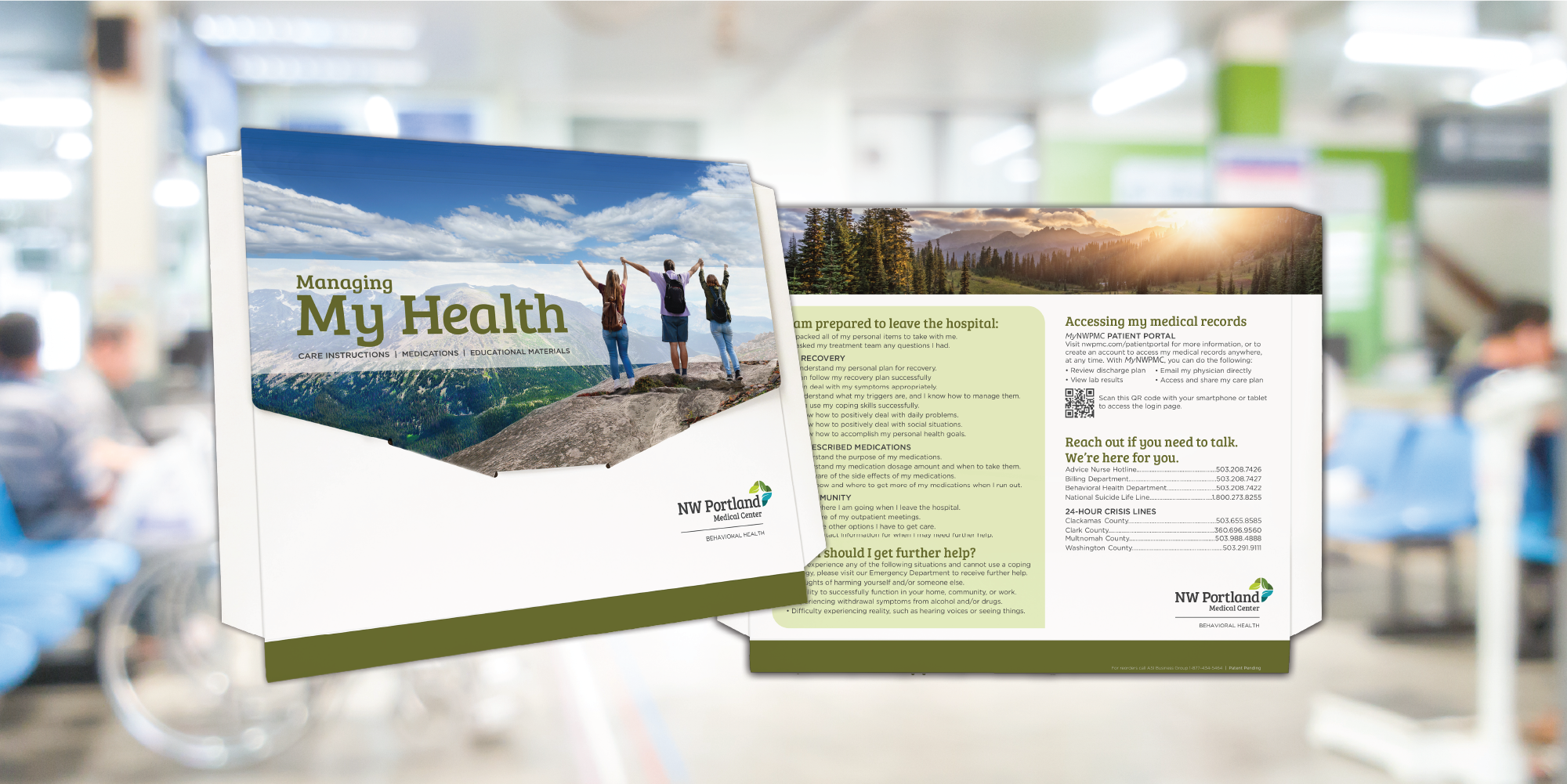
is a patient educational tool designed to help healthcare organizations who needed a better way to provide patients with clear, organized behavioral health resources during the discharge process. I designed a patient education folder that structured critical information into an easy-to-navigate format, combining content design, visual hierarchy, and print production. The folder was later white-labeled for multiple healthcare organizations, allowing providers to deliver consistent, branded educational materials that support patient understanding and follow-up care.
This was a 0→1 content and communication system designed to improve how behavioral health information is delivered at the time of discharge.
Timeline
2019
Role
Lead Designer
Communication Design
Healthcare Research
Communication Strategy
Deliverables
Patient Discharge Folder
White-Labeled Versions
Email Marketing Campaign
Content Strategy
3x
more likely to follow post-discharge instructions when given a folder
22%
reduced readmissions within 30 days
18%
of new clients targeted within first year of launch
The Opportunity
During the discharge process, behavioral health patients were often given fragmented paperwork with overwhelming information, making it difficult to understand next steps in their care. I saw an opportunity to create a more structured, patient-centered approach to delivering educational resources and continuity-of-care information.
Without redesigning the existing physical folder itself, I defined what information needed to be included, how it should be organized, and how educational content could support both patient understanding and provider goals. The result was a scalable communication system designed to help behavioral health organizations deliver clearer, more actionable discharge information across multiple departments.
Using Systems Thinking to Design for Measurable Outcomes
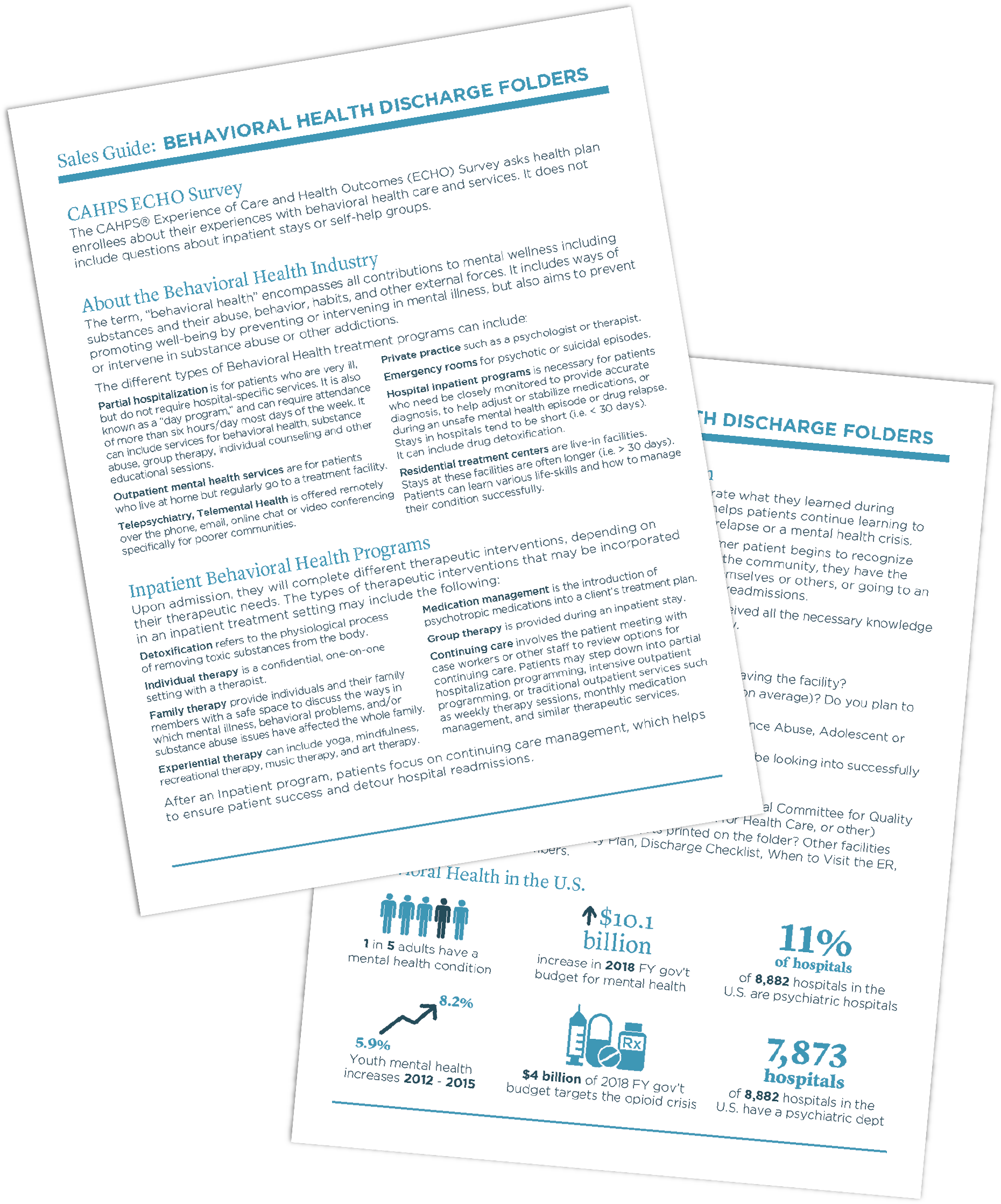
To better understand how behavioral health organizations measure patient outcomes and continuity of care, I researched the CAHPS ECHO Survey, a standardized assessment used to evaluate patient experiences with behavioral healthcare services. These measurements are closely tied to patient outcomes, continuity of care, and organizational quality benchmarks. In addition, CAHPS ECHO Survey results allow state regulators to link Medicaid behavioral health plan quality incentives to specific member-reported outcomes.
This research directly informed the content strategy for the folder. I developed educational materials focused on crisis planning, medication management, continuing care, discharge readiness, and patient support, which are all areas connected to successful care transitions and long-term patient outcomes.
By grounding the content in measurable healthcare priorities, the folder evolved into a structured communication tool designed to support both patients and provider organizations.
My research included the following key focus ares:
CAHPS ECHO Survey and behavioral health quality metrics
Continuity of care and discharge planning
Crisis safety planning and relapse prevention
Patient education and health literacy
Behavioral health treatment workflows
Readmission reduction and post-discharge support
Scalable white-label communication systems
The Folder Content



Email Marketing Campaigns
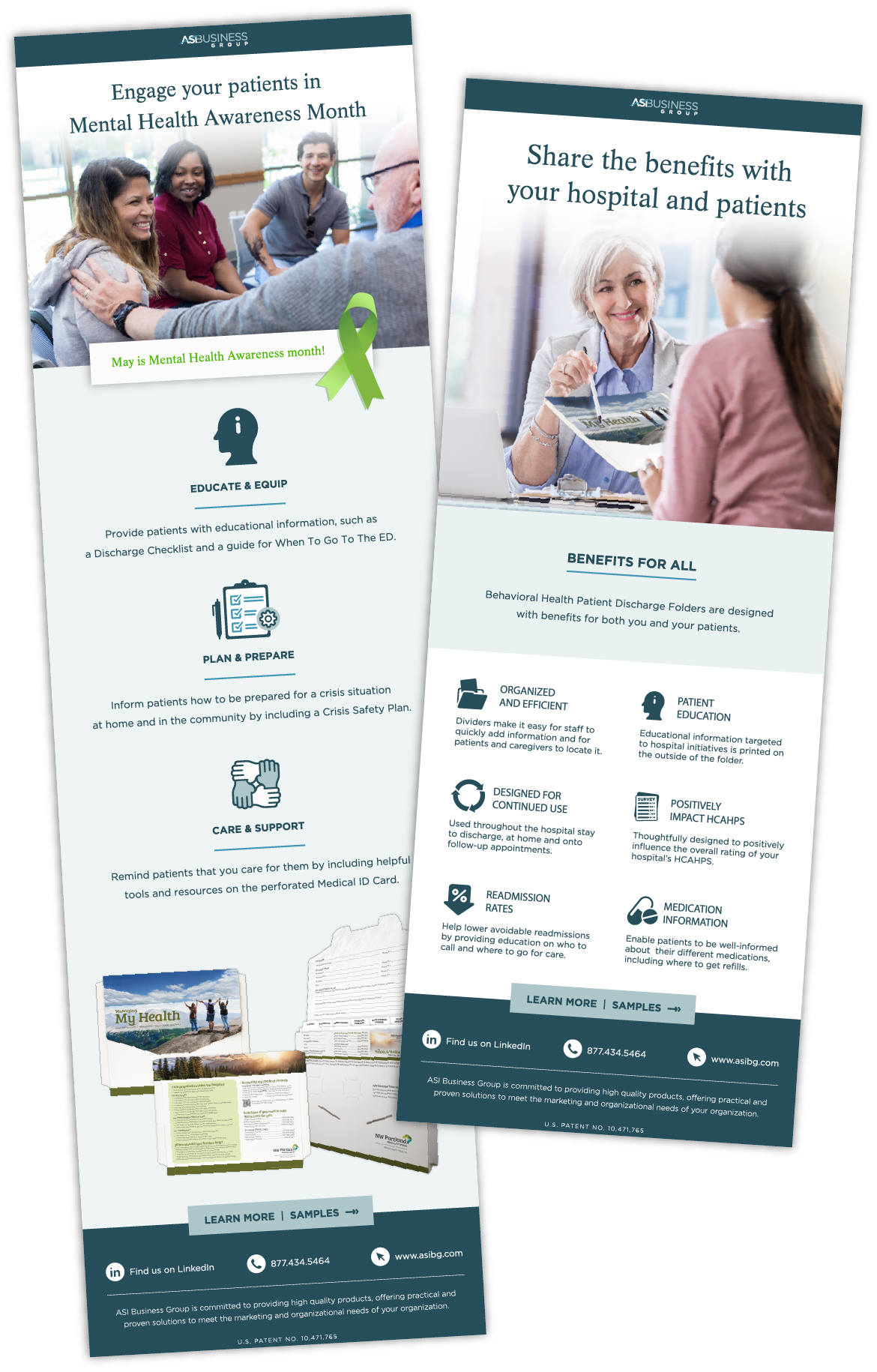
These email campaigns were created as part of a 0→1 effort to define how the Behavioral Health Discharge Folder would be introduced to healthcare organizations.
I developed the messaging, content hierarchy, and visual design to communicate both patient impact and organizational benefits. The campaigns were designed to support sales outreach and product education by turning a complex solution into clear, actionable communication for decision-makers.
The campaigns were designed to align with other sales and educational materials, creating a consistent communication system across email, print, and phone outreach.